 Orders placed between June 24 and July 5 may experience slight processing delays due to inventory reconciliation and warehouse maintenance.


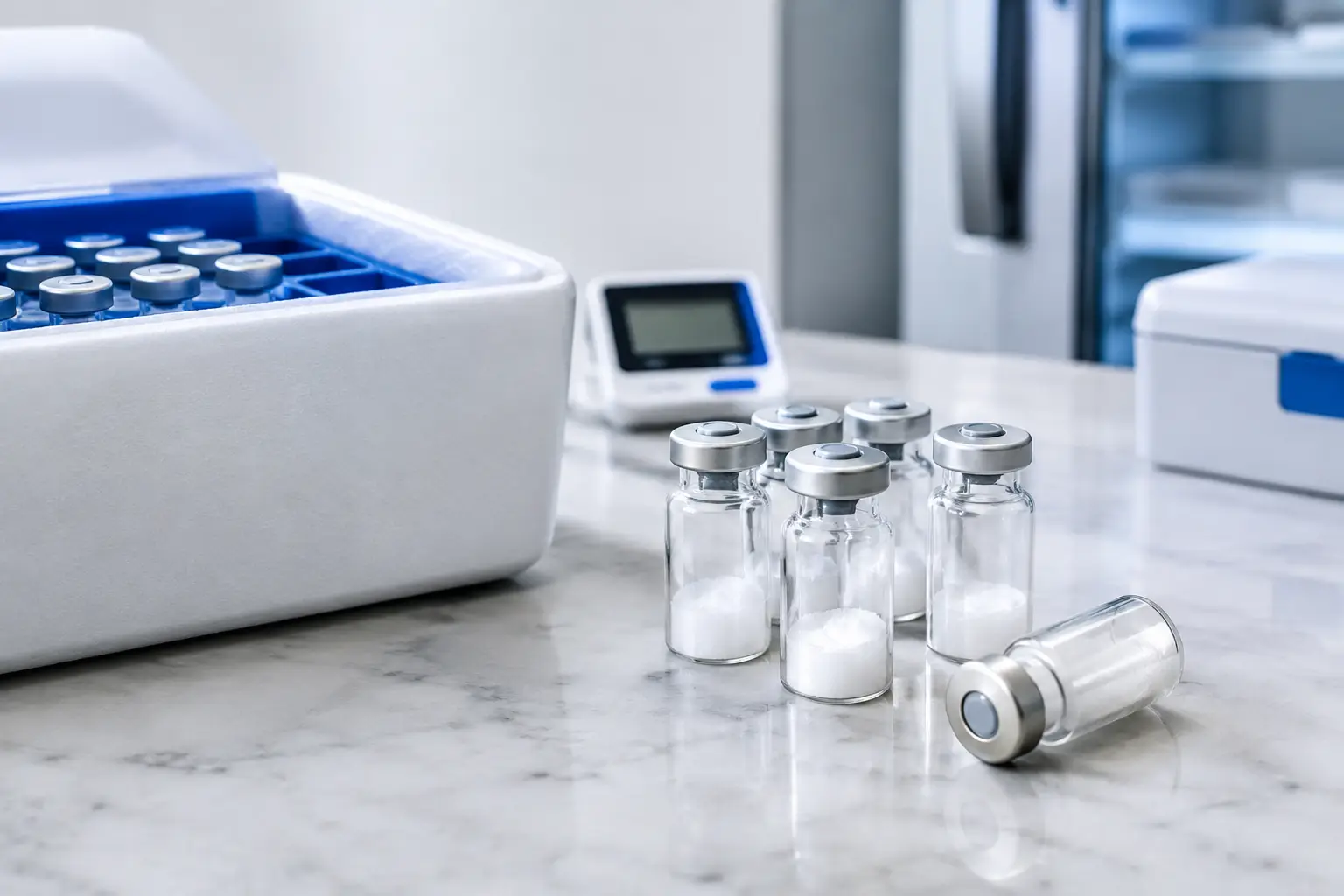
A premium research compound can lose value long before it reaches the bench if storage is careless. Temperature swings, light exposure, moisture, and weak labeling practices can compromise sample integrity and make results harder to interpret. Knowing how to store research peptides properly is part of disciplined research – not an afterthought once an order arrives.
For serious buyers, storage should match the same standard used when evaluating purity, manufacturing quality, and third-party testing. A clean, controlled process protects the material you paid for and supports more consistent research outcomes.
How to Store Research Peptides Properly From Day One
Start with the product-specific documentation and packaging instructions. There is no single storage rule that applies to every peptide, formulation, or presentation. Stability can vary based on the peptide sequence, whether the material is lyophilized or already reconstituted, the vial closure, and the solvent used after reconstitution.
The supplier’s storage guidance takes priority over general advice. Review the label, certificate of analysis, and any handling instructions before moving a vial to a refrigerator or freezer. If the product arrives with cold-chain packaging, inspect the package promptly and transfer the material to its recommended storage environment without unnecessary delay.
Do not assume that colder is always better. Some materials are intended for refrigerated storage, while others may be suitable for frozen storage for longer-term preservation. Putting a sample in the wrong environment can create avoidable risks, especially if repeated freezing and thawing follows.
Separate long-term storage from working storage
A practical setup distinguishes between inventory held for later research and material being accessed for an active project. Long-term inventory should remain sealed and undisturbed at the manufacturer-recommended temperature. Working material should be organized so the correct vial can be retrieved quickly, limiting the time it spends outside controlled conditions.
This simple separation reduces handling errors. It also prevents the entire inventory from being repeatedly exposed to room-temperature air every time one sample is needed.
Control Temperature Without Constant Cycling
Temperature stability matters as much as the target temperature. A refrigerator or freezer that fluctuates heavily, is opened constantly, or has poor internal organization is not a controlled storage solution. Place research materials in a dedicated, monitored area when possible, away from food, beverages, and general household traffic.
Avoid storing vials in the refrigerator door. The door is exposed to the largest temperature changes during normal use. A stable interior shelf or designated storage box is a better choice.
For samples that require frozen storage, minimize freeze-thaw cycles. Repeated cycling can stress sensitive compounds and complicate stability over time. If a research protocol requires access to smaller quantities on different days, aliquoting may be appropriate when performed with suitable equipment, aseptic technique, and product-specific compatibility in mind. The goal is to protect the remaining stock from unnecessary handling.
Do not leave samples on a counter while organizing a workspace, answering messages, or preparing unrelated equipment. Retrieve only what is needed, complete the task efficiently, and return the material to controlled storage promptly.
Protect Peptides From Light and Moisture
Light and moisture are two common threats that receive less attention than temperature. Many research compounds benefit from being kept in their original sealed vial, inside an opaque container or storage box, and away from direct sunlight. A bright windowsill, open shelf, or vehicle is not an acceptable storage location.
Moisture control is particularly relevant for lyophilized material. Keep vials tightly closed, avoid exposing them to humid air for extended periods, and do not transfer material between containers unless the research workflow requires it. Original packaging often provides useful protection against environmental exposure, so retain it when practical.
Condensation deserves attention as well. When a cold vial is brought into a warmer room, moisture can collect on the outside. Allowing the sealed vial to equilibrate before opening can reduce the chance of humidity entering the container. This is a small handling detail with a meaningful payoff for maintaining controlled conditions.
Labeling Is a Research Control, Not Clerical Work
A vial without clear identification is a liability. Label every stored item so it can be identified without relying on memory, invoice history, or visual guesswork. At minimum, the record should connect the sample to its compound name, lot or batch identifier, date received, storage condition, and relevant expiration or retest date.
For reconstituted materials, add the reconstitution date, the solvent or vehicle used, and the assigned storage condition based on the product guidance. If aliquots are prepared, each aliquot needs its own traceable label. A box full of unmarked microtubes may look organized, but it creates major uncertainty when time has passed.
Digital inventory records strengthen the process. A simple spreadsheet or laboratory inventory system can document where each vial is stored, when it was accessed, and whether it has been reconstituted or aliquoted. For small-scale researchers, this level of documentation can prevent expensive mix-ups and reduce unnecessary repurchasing.
Build a clear storage map
Organization should be visual and repeatable. Use labeled storage boxes, dividers, or racks that separate compounds by project, storage temperature, or status. Keep active samples apart from unopened inventory and clearly mark any vial that should not be returned to long-term storage.
The objective is speed and certainty. When every item has a designated place, handling time drops and research continuity improves.
Handle Reconstituted Material With More Discipline
Once a peptide has been reconstituted, the storage conversation changes. Reconstituted material may have a shorter usable stability window than the original lyophilized form, and that window depends on the compound, concentration, solvent compatibility, container, and storage temperature. Follow the specific documentation provided for that material rather than relying on generic forum advice.
Use clean technique and appropriate laboratory supplies to reduce contamination risk. Do not reuse compromised closures, leave containers uncapped, or return material to the original vial after it has been transferred into another container. If the appearance changes unexpectedly, such as visible particles, discoloration, cloudiness, or container damage, isolate the sample and review its handling history before using it in research.
It depends on the project whether aliquoting is necessary. For an experiment requiring repeated access over time, smaller properly labeled portions can reduce repeated disturbance of the primary stock. For a short, controlled workflow, an additional transfer step may add complexity without delivering a real benefit. The right decision is the one that protects integrity while fitting the documented stability requirements.
Avoid the Storage Mistakes That Undermine Good Materials
Most peptide storage failures are operational, not dramatic. They come from treating a precision material like a casual supplement or leaving important decisions to memory. The following mistakes deserve immediate correction:
- Storing vials in direct light, humid spaces, vehicles, or refrigerator doors.
- Ignoring product-specific labeling in favor of a one-size-fits-all temperature rule.
- Allowing frequent freeze-thaw cycles because the entire stock is accessed repeatedly.
- Keeping samples in unlabeled containers or failing to record dates and lot details.
- Opening cold vials immediately in a humid room and increasing condensation risk.
- Mixing research inventory with food, household items, or unrelated materials.
These issues are preventable with a disciplined workflow. A well-organized storage process also makes it easier to spot exceptions, such as a package exposed during transit or a sample accidentally left outside its intended environment.
Choose Quality Before Storage Even Begins
Storage can preserve quality, but it cannot create it. Reliable research starts with materials that are clearly labeled, professionally packaged, and supported by transparent testing documentation. A trusted supplier reduces uncertainty at the point of purchase, while proper storage protects that quality after delivery.
ASN-LABS positions research compounds around lab-tested quality, consistent sourcing, and professional handling standards. That matters because confident storage decisions begin with clear product information, identifiable lot details, and packaging designed for research materials rather than vague, untraceable inventory.
Keep all research compounds clearly separated from products intended for human or animal use, and follow applicable institutional, local, and federal requirements. These materials are for research use only and should be handled only within an appropriate research setting.
Precision does not end with the label or the laboratory report. It continues every time a vial is received, logged, stored, retrieved, and returned to controlled conditions.